
On April 15, 2025, the Ministry of Energy and Mineral Resources (MEMR) officially enacted MEMR Regulation No. 10 of 2025 concerning the Energy Transition Road Map for the Electricity Sector (MEMR Regulation 10/2025). This regulation is a follow-up to Presidential Regulation No. 112 of 2022 on the Acceleration of Renewable Energy Development for Electricity Supply (Presidential Regulation 112/2022). It signifies the government’s strong commitment to achieving Net Zero Emissions by 2060 or sooner, aligning with Indonesia’s ratification of the Paris Agreement through Law No. 16 of 2016.
The Energy Transition Road Map outlines various measures, including limiting the construction of new Coal-Fired Power Plants (CFPPs) and accelerating the decommissioning of existing CFPPs (Article 2 paragraph (2) letters d and i of MEMR Regulation 10/2025). This initiative aims to reduce reliance on fossil fuels, particularly coal, which has severely impacted the environment through deforestation, soil erosion, water and air pollution, and the disruption of ecosystems and biodiversity. These environmental damages have contributed to a decline in the quality of life and have accelerated global climate change (Abdel-Sharkawy, 2022).
However, it is important to recognize that Indonesia still heavily depends on CFPPs. According to research by the Centre for Research on Energy and Clean Air (CREA) and Global Energy Monitor (GEM), as of 2023, Indonesia operated 249 CFPP units with a combined capacity of 45,638 MW. Of these, 83 units (20,326 MW) were operated by state utility company PT PLN (based on BPS data, 39,413 MW), while 49 units (14,491 MW) were privately operated. The remaining 117 units (10,821 MW) were captive power plants serving industrial needs, particularly nickel smelters. The MEMR also reported that in the first half of 2024, 53% of Indonesia’s installed power generation capacity came from CFPPs.
The development and operation of CFPPs have largely been supported by financing from Indonesian financial institutions, including both state-owned and private banks. For example, in 2019, PLN secured syndicated financing worth IDR 7.91 trillion, comprising IDR 5.07 trillion in conventional loans and IDR 2.84 trillion in sharia-compliant financing, to fund CFPP and Gas Engine Power Plant (GEPP) projects under the 35,000 MW electricity infrastructure program (PLN Press Release, 2019). Additionally, in 2024, the Sumsel-8 Mine-Mouth CFPP, part of the same 35,000 MW program, secured USD 1.27 billion in refinancing from a state-owned bank (Bukit Asam Press Release, 2024). Various captive CFPPs supplying power to industrial facilities, including smelters, have also received long-term financing.
The increasing regulatory pressure surrounding energy transition and CFPP retirement presents significant challenges for the Indonesian banking sector. One challenge lies in the often inconsistent and evolving regulations—financial institutions are expected to reduce financing for fossil fuel projects, yet alternative renewable projects are not yet available at the necessary scale. Furthermore, the lack of sufficient renewable energy projects makes it difficult for banks to replace income previously earned from CFPP financing.
Most banks in Indonesia, both private and state-owned, have committed to implementing Environmental, Social, and Governance (ESG) principles, including gradually reducing or halting financing for environmentally harmful industries (including CFPPs). In practice, the concept of “reducing” requires a series of concrete steps, taking into account the current energy needs still supported by CFPPs, alignment with government electrification programs, and the need to ensure business continuity for both the banking sector and the industries being financed. The banking sector must take bolder steps since new financing and refinancing of CFPPs are still occurring.
Indicators and Limits for CFPP Financing
One approach that banks can take is to develop internal policies that establish specific indicators and limits on the financing of CFPPs, in alignment with government regulations. For instance, financing may only be provided to CFPPs that are part of national strategic projects, are committed to reducing greenhouse gas emissions by at least 35%, and are scheduled to operate no later than 2050 (Article 6 of MEMR Regulation No. 10/2025).
To ensure accountability, financing arrangements can include specific requirements for borrowers, such as the implementation of Key Performance Indicators (KPIs). These KPIs may adopt the technical criteria outlined in the sustainable finance taxonomy issued by the Financial Services Authority (OJK). For example, they can use Technical Screening Criteria to assess the construction or operational performance of CFPPs, evaluating aspects such as environmental impact or measurable relative improvements (Indonesia Sustainable Finance Taxonomy, OJK, 2024).
Banks may also require borrowers in the CFPP sector to submit periodic reports demonstrating their Environmental, Social, and Governance (ESG) performance. In addition, the banking sector should consider setting a clear timeline for the phase-out of CFPP financing to serve as a guideline for future lending and investment decisions.
Expanding Sustainable Project Financing
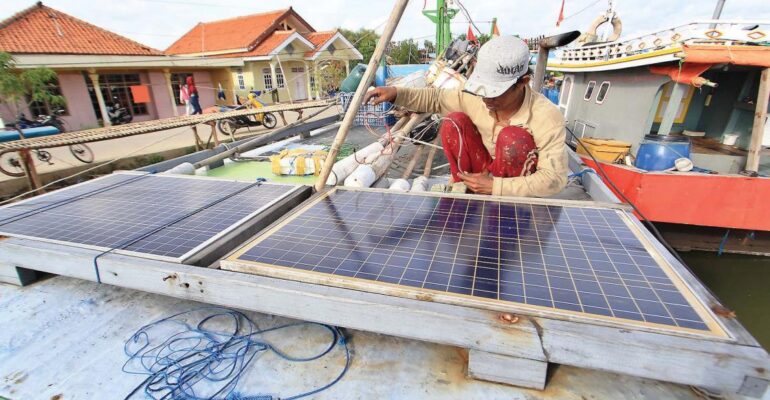
As outlined in MEMR Regulation 10/2025 and Presidential Regulation 112/2022, the government is planning to replace decommissioned CFPPs with alternative power sources that will require financing. This presents an opportunity for banks to expand into sustainable and renewable energy financing. Special loan products, such as green loans with preferential interest rates or fees, could be introduced. Such efforts would not only meet ESG responsibilities but also enhance the bank’s competitiveness, including in international markets.
Beyond these steps, Indonesian banks can also take part in global initiatives such as the Net-Zero Banking Alliance. This could boost global exposure and create more opportunities to finance sustainable industries and projects. Banks might also consider transitioning their portfolios toward renewable energy, reducing loan exposure limits for CFPP projects, and setting clear risk thresholds for non-sustainable financing. Ultimately, these decisions will depend on each bank’s strategy, balancing market demand and long-term business viability.
We all hope that Indonesia’s banking sector can become more adaptive and provide innovative financial solutions to support the government’s energy transition agenda.
